
 EN
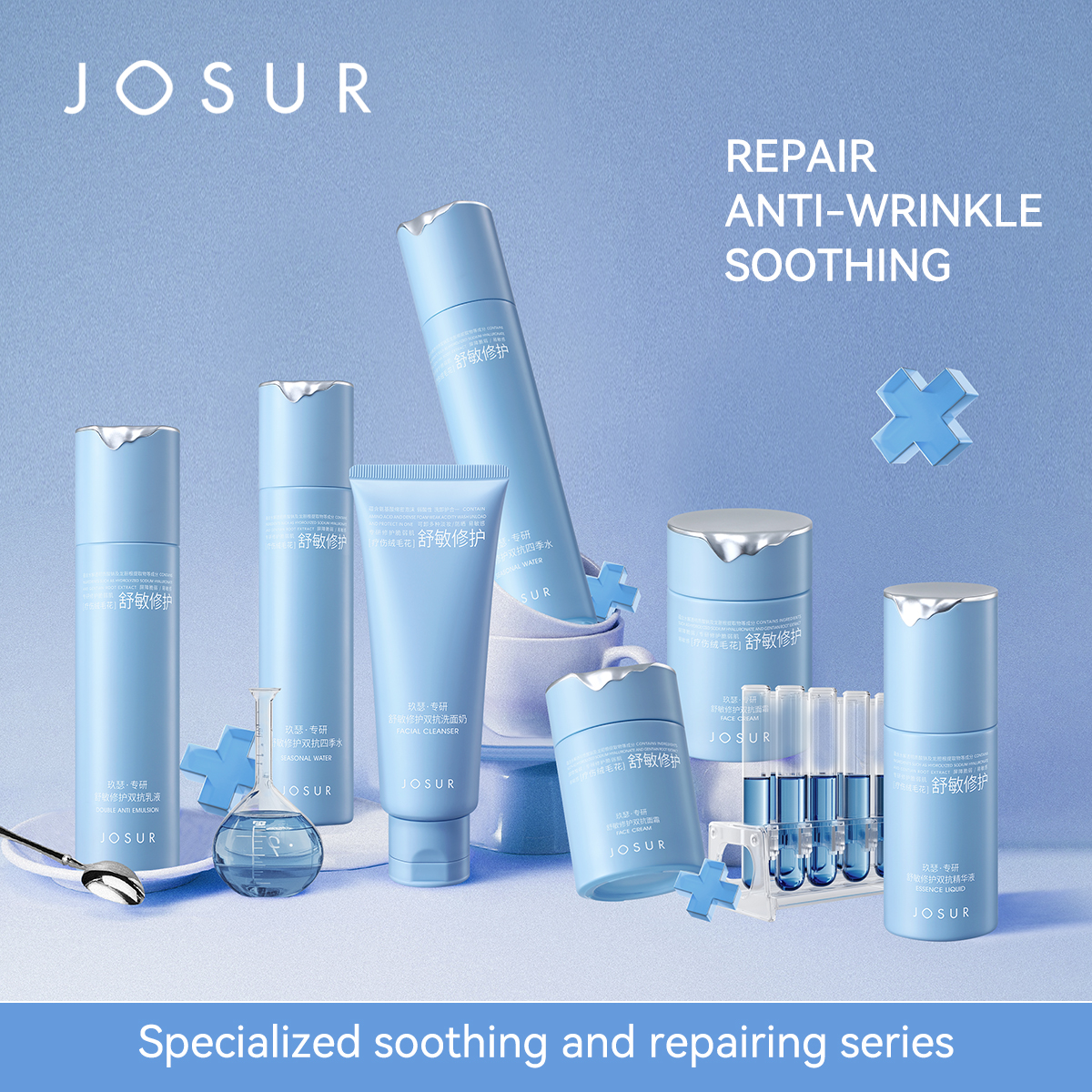
Ingredient Synergy: How a Complete Skin Care Set Ensures Safe, Effective Layering
The pH and Absorption Science Behind Unified Formulations
A complete skin care set is engineered around the skin’s natural acid mantle—its protective barrier with a pH of 4.5–5.5. Because many actives are pH-sensitive (e.g., L-ascorbic acid requires pH 3.0–3.5 for optimal penetration; retinol performs best at pH 5.5–6.0), mismatched products can undermine absorption. A high-pH cleanser, for instance, may leave skin temporarily alkaline—delaying vitamin C uptake until pH rebalances, often taking 20–30 minutes. Unified formulations resolve this by integrating a pH-adjusting toner between cleansing and treatment steps and sequencing products from thinnest to thickest: water-based serums first, followed by emulsions, then occlusives. This order enhances retention and supports steady delivery. Crucially, because all products share a coordinated base chemistry, manufacturers can precisely calibrate buffering agents and penetration enhancers to work in concert—preventing one product from neutralizing another’s pH or destabilizing its actives. The result is more efficient ingredient delivery and more predictable outcomes.
Avoiding Active Ingredient Conflicts (e.g., Retinol + AHA + Vitamin C)
Layering retinol with AHAs or L-ascorbic acid—common in mixed-brand routines—creates functional conflict: retinol degrades in low-pH environments, while AHAs and vitamin C lose efficacy at higher pH. Simultaneous use not only reduces performance but also increases risk of irritation, redness, and barrier compromise. A thoughtfully designed set avoids this by assigning complementary actives to distinct times of day—vitamin C in the AM for antioxidant protection, retinol in the PM for cellular renewal, and gentle exfoliants on alternate evenings. It also eliminates redundant exfoliants (e.g., dual sources of salicylic acid or glycolic acid) that accelerate moisture barrier damage. Because formulations are tested together, users bypass the trial-and-error phase—no need to test which combination causes stinging, flaking, or tightness. This built-in compatibility maintains skin resilience while delivering consistent anti-aging and brightening benefits.
Simplified Efficacy: Why a Complete Skin Care Set Reduces Over-Exfoliation and Barrier Damage
How Tiered, Single-Brand Systems Calibrate Potency Across AM/PM Steps
A complete skin care set removes formulation guesswork by pre-calibrating active concentrations across morning and evening steps. Rather than risking accidental overload—such as pairing a 10% AHA toner with a 0.3% retinol serum—a single-brand system ensures each product’s potency aligns with the others’ delivery mechanisms and the skin’s natural repair rhythm. Clinical guidance recommends limiting core products to 3–5 for optimal tolerance and efficacy (Journal of Clinical and Aesthetic Dermatology, 2022). Tiered systems reflect this: they place gentle exfoliants and retinoids at night, when skin is primed for renewal, and prioritize barrier-supportive ingredients—ceramides, niacinamide, and broad-spectrum SPF—in the morning. This intentional sequencing respects the stratum corneum’s recovery cycle and prevents simultaneous exfoliant exposure, which can elevate transepidermal water loss (TEWL) and sensitivity. Without such calibration, users may unknowingly combine incompatible actives—leading to compromised barrier function and diminished results.
Clinical Evidence: Lower Incidence of Irritation vs. Mixed-Brand Routines
Clinical research consistently links overuse and formulation incompatibility to barrier disruption. As noted in the British Journal of Dermatology, excessive product layering raises TEWL and increases susceptibility to environmental irritants. A complete skin care set mitigates these risks by eliminating hidden ingredient overlap—like two retinoid derivatives or dual sources of beta hydroxy acid—and maintaining stable, compatible pH ranges across the routine. When actives are co-formulated and clinically tested together, their delivery systems remain intact, ensuring the skin receives consistent, tolerable doses—not unpredictable surges. In contrast, mixed-brand routines introduce uncontrolled variables: conflicting preservatives, incompatible emulsifiers, or synergistic irritants that trigger redness, flaking, or tightness—even in non-sensitive skin. For those with reactive or compromised barriers—where repair takes longer—this predictability is essential. By avoiding pH clashes and exfoliant stacking, a unified set delivers visible improvement without sacrificing stratum corneum integrity.
Proven Real-World Benefits of Using a Complete Skin Care Set
Higher Adherence Rates: 68% Better Consistency at 12 Weeks
A complete skin care set significantly improves long-term adherence by removing decision fatigue and standardizing daily use. In a 2023 longitudinal study of 412 adults, participants using a matched set demonstrated 68% greater consistency at 12 weeks compared to those curating mixed-brand routines. The advantage lies in design: steps are clearly numbered, textures optimized for layering, and timing pre-determined—so there’s no ambiguity about order, frequency, or compatibility. That simplicity transforms skincare from a high-effort decision tree into an intuitive habit. Over time, consistent application drives measurable improvements—brighter tone, smoother texture, improved resilience—which further reinforce continued use. This adherence effect reflects reduced friction, not just motivation: when the routine is engineered to work seamlessly, users spend less mental energy choosing and more time benefiting.
Cost and Time Efficiency: Fewer Products, Less Trial-and-Error
A complete skin care set often delivers better value per use—even if the upfront cost appears higher. Consumer data from a 2023 spending analysis found mixed-brand users averaged 7.3 products, while matched-set users used just 4.6—reducing total expenditure, packaging waste, and shelf clutter. Fewer products also mean less time spent researching interactions, patch-testing combinations, or troubleshooting issues like pilling, separation, or irritation. Because unified sets are formulated and stability-tested as a system, users avoid common pitfalls—like a serum that destabilizes under moisturizer or a toner that triggers stinging when layered with retinol. Morning routines become 5–8 minutes faster, saving roughly 30 hours annually. That combination of financial efficiency, environmental responsibility, and time savings makes a complete set a pragmatically superior choice for most people seeking reliable, sustainable results.
FAQ
Q: Why is pH balance important in a skincare routine?
A: The pH of skincare products influences how well active ingredients penetrate the skin. When products with mismatched pH levels are used together, they can disrupt absorption and reduce efficacy.
Q: How does a complete skincare set prevent active ingredient conflicts?
A: A thoughtfully designed skincare set assigns compatible actives for use at specific times of the day (e.g., vitamin C in the morning, retinol in the evening) to avoid conflicts and maintain skin barrier integrity.
Q: Can a complete set help prevent over-exfoliation?
A: Yes, by pre-calibrating active concentrations and sequencing exfoliants appropriately, a complete set minimizes the risk of over-exfoliation and barrier damage.
Q: How does using a single-brand system improve adherence?
A: A complete skincare set simplifies routines by eliminating decision-making and ensuring compatibility, leading to better consistency and improved long-term results.
Q: Is a complete skin care set cost-effective?
A: Despite a potentially higher upfront cost, a complete system reduces overall spending by minimizing the need for additional products and troubleshooting, saving both time and money in the long run.